
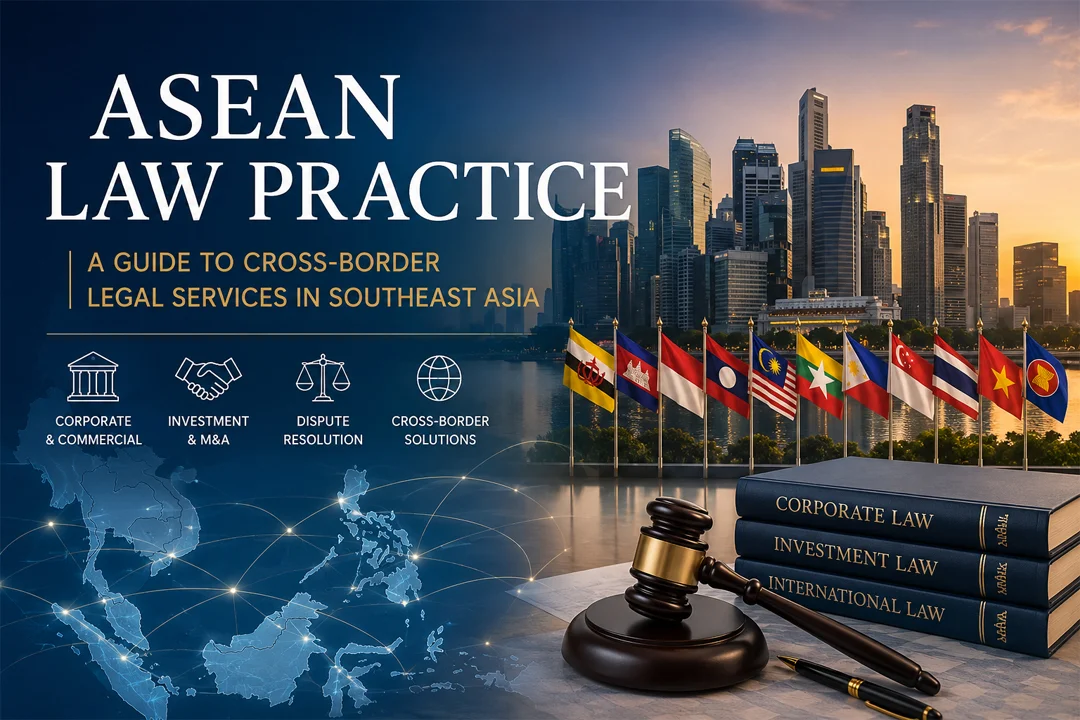
ASEAN is one of Southeast Asia’s most interconnected business regions, offering significant opportunities for companies seeking new markets, investment and regional growth. For Singapore businesses expanding into Malaysia, Indonesia, Thailand, Vietnam, the Philippines and other ASEAN markets, however, regional expansion also means navigating different legal systems, regulatory requirements, investment rules, corporate structures, employment laws, contractual requirements and dispute-resolution procedures. These differences can affect everything from how a business establishes a local presence to how it structures investments and manages commercial relationships.
Effective ASEAN law practice requires more than a general understanding of regional business. Businesses can benefit from lawyers who understand Singapore law while also having insight into the legal environment and business culture of the relevant ASEAN jurisdiction. Aquinas Law takes a Singapore-based, regionally connected approach to cross-border legal matters, helping clients understand the legal environments and business cultures across ASEAN. Through its regional connections, the firm supports businesses navigating corporate, investment, transactional and dispute-related matters across Southeast Asia.
What Is ASEAN Law Practice?
Why Businesses Need ASEAN Legal Advice

Expanding a business across ASEAN can open the door to new customers, investment opportunities, partnerships and regional growth. However, entering a new market also introduces legal and commercial considerations that may be unfamiliar to a business operating primarily in Singapore. Differences in legislation, regulatory processes and commercial practices can affect how a company structures its operations, enters into agreements and manages its activities in another jurisdiction. Obtaining appropriate ASEAN legal advice at an early stage can help businesses understand these requirements and make more informed decisions.
Different Legal and Regulatory Frameworks
One of the main challenges of regional expansion is that laws governing corporate structures, foreign investment, employment, licensing and commercial transactions can differ significantly between ASEAN countries. A corporate structure or business arrangement that is suitable in Singapore may not be appropriate for another jurisdiction without modification. Businesses therefore need to assess the specific legal framework of each market rather than assuming that their existing arrangements can be applied across the region.
Foreign Investment Requirements
Foreign investors may also need to address requirements that affect how they can establish or operate a business. Depending on the jurisdiction and industry, these may include:
- Foreign ownership restrictions.
- Investment approvals.
- Sector-specific regulations.
- Local entity or partner requirements.
- Licensing and registration requirements.
Cross-Border Contracts
Contracts involving parties in different ASEAN countries require careful consideration of how potential disagreements will be handled. Businesses should pay particular attention to governing law, jurisdiction, dispute resolution, enforcement and contractual obligations. Clearly defining these matters can provide greater certainty over the parties’ rights and responsibilities if a commercial dispute arises.
Different Business Cultures
Legal considerations are only one part of successful regional expansion. Businesses may also encounter differences in negotiation styles, commercial expectations, relationship-building and business practices. Aquinas Law’s regional approach recognises the importance of understanding both local legal environments and business cultures across ASEAN, helping clients navigate cross-border relationships with greater awareness of the market in which they operate.
Key Areas of ASEAN Law Practice

ASEAN law practice covers a broad range of legal services supporting businesses and investors operating across Southeast Asia. Depending on the nature of the business and the jurisdictions involved, legal support may be required for corporate structuring, investment, M&A, commercial transactions, dispute resolution and other cross-border matters.
Corporate and Commercial Law
Businesses entering or expanding within ASEAN may require advice on company formation, corporate structuring, shareholder agreements, commercial contracts, corporate governance and regulatory compliance. The appropriate structure can depend on ownership arrangements, investment objectives and the legal requirements of the target jurisdiction.
Cross-Border M&A and Joint Ventures
Foreign Direct Investment
An ASEAN FDI lawyer can help investors assess these considerations and determine an appropriate investment structure. Understanding ASEAN foreign investment law and ASEAN investment law at an early stage can also help businesses evaluate market-entry options before committing capital.
International Trade and Commercial Transactions
Dispute Resolution and International Arbitration
Cross-border disputes can become more complicated when parties or assets are located in different jurisdictions. Businesses may need to consider litigation, arbitration or mediation, together with the appropriate choice of forum and the enforceability of judgments or arbitral awards.
Aquinas Law’s dispute-resolution practice includes international arbitration, mediation and cross-border litigation, supporting clients in commercial and contractual disputes with international elements.
Intellectual Property
Regional expansion can create additional requirements for protecting valuable intellectual property. Businesses should consider the protection and enforcement of trademarks, copyright, patents and trade secrets, as well as IP licensing arrangements with local partners or businesses.
Real Estate and Private Client Matters
ASEAN legal services can also cover international real estate, property transactions and private client matters. Individuals and families with cross-border assets may require advice on succession and wealth planning, while businesses and investors may need support with property-related transactions.
Legal Considerations When Expanding a Business Across ASEAN
- Identify the target ASEAN market
- Understand foreign ownership restrictions
- Select an appropriate corporate structure
- Review licensing and regulatory requirements
- Conduct legal due diligence
- Prepare cross-border contracts
- Protect intellectual property
- Review employment requirements
- Plan dispute-resolution mechanisms
- Maintain ongoing corporate compliance
Considering these areas before entering a new ASEAN market can help businesses make better-informed decisions and establish a stronger legal foundation for regional operations. For companies expanding from Singapore, working with legal advisers who understand both Singapore requirements and the legal environment of the target ASEAN jurisdiction can provide valuable support throughout the expansion process.
ASEAN Legal Network and Cross-Border Collaboration
Cross-border business matters can become more complex when a transaction involves several ASEAN jurisdictions, each with its own laws, regulators, procedures and business environment. Having coordinated legal support across multiple markets can help businesses manage these differences more effectively. Instead of approaching each jurisdiction as a separate legal matter, businesses can benefit from a regional approach that connects the relevant legal expertise while keeping the overall commercial objective in focus.
Why a Regional Legal Network Matters
- Local jurisdictional knowledge – Access to lawyers familiar with the laws and commercial environment of the relevant market.
- Coordinated cross-border advice – Better coordination when a transaction involves multiple jurisdictions.
- Consistent transaction management – A more structured approach to managing legal work across different markets.
- Local regulatory insight – Greater awareness of jurisdiction-specific regulatory requirements and procedures.
- Easier communication between counsel – Coordination between legal teams can help reduce unnecessary complexity for the client.
- Support across multiple ASEAN markets – Businesses can access regional legal support as their operations expand into additional jurisdictions.
For businesses considering regional expansion, investment, M&A or other cross-border activities, this approach can provide more than access to individual local lawyers. It can create a connected legal framework that combines Singapore-based counsel, local jurisdictional expertise and an understanding of the wider ASEAN business environment.
Common Legal Challenges in ASEAN Cross-Border Transactions

Foreign Ownership Restrictions
Regulatory Approvals
Different Contractual Requirements
Tax and Corporate Structuring Considerations
Intellectual Property Protection
Employment and Labour Regulations
Dispute Resolution and Enforcement
Differences in Business Culture
How to Choose an ASEAN Law Firm?
Choosing an ASEAN law firm requires more than looking at a firm’s general legal capabilities. Businesses involved in regional expansion, investments or cross-border transactions should consider whether the firm has the relevant experience, jurisdictional knowledge and regional connections to address the legal requirements of the markets involved.
- Experience in Cross-Border Transactions
- Local Jurisdictional Knowledge
- Corporate and Commercial Expertise
- M&A and Investment Experience
- Dispute-Resolution Capabilities
- Regional Legal Networks
- Understanding of Local Business Practices
- Ability to Coordinate Multi-Country Matters
These factors are particularly important when a transaction involves several ASEAN jurisdictions. A suitable legal adviser should be able to understand the client’s commercial objectives, identify jurisdiction-specific considerations and coordinate with relevant counsel where local expertise is required.
For businesses seeking Singapore-based counsel with a regional focus, Aquinas Law positions itself as a regionally connected Singapore firm with a focus on ASEAN and China. The firm works with firms across ASEAN through the ASEAN Legal Alliance, which comprises law firms from all ten ASEAN member states and provides access to local legal and business knowledge across the region.
How Aquinas Law Supports Businesses Across ASEAN?
Its capabilities include:
- Corporate & Commercial – Advice on corporate and commercial matters affecting businesses and their operations.
- Cross-Border Transactions – Legal support for transactions involving parties, businesses or assets across different jurisdictions.
- M&A and Joint Ventures – Assistance with acquisitions, mergers, joint ventures and related due diligence.
- Corporate Finance and Banking & Finance – Advice on financing arrangements and related corporate and financial matters.
- Dispute Resolution – Support for commercial disputes, including international arbitration and mediation.
- Private Clients & Real Estate – Legal assistance relating to private client matters and international property transactions.
- China Practice & Cross-Border ASEAN Advisory – Support for businesses dealing with China-ASEAN commercial and investment matters.
Aquinas Law’s regional approach is also supported by its relationship with the ASEAN Legal Alliance, a network connecting firms across all ten ASEAN member states. This allows the firm to combine its Singapore-based legal perspective with access to local legal and business knowledge when clients require support across multiple ASEAN jurisdictions.
Conclusion
Expanding across ASEAN can create significant opportunities, but businesses also need to navigate different legal systems, investment rules, regulatory requirements, contractual obligations and business practices. There is no single legal framework governing the entire region, making appropriate legal advice important when entering new markets, establishing partnerships, making investments or managing cross-border transactions.
For Singapore-based businesses, a combination of Singapore legal expertise and regional knowledge can provide a practical foundation for ASEAN expansion. Aquinas Law’s Singapore-based practice and ASEAN focus enable it to support clients across corporate, investment, transactional and dispute-related matters, while its regional connections provide access to local expertise where required. A coordinated legal approach can help businesses identify potential issues early and pursue regional growth with greater clarity.
Frequently Asked Questions
What is ASEAN law practice?
ASEAN law practice refers to legal advice and support for businesses and individuals involved in cross-border activities across ASEAN jurisdictions. It can cover areas such as corporate structuring, foreign investment, M&A, commercial contracts, dispute resolution, intellectual property and regulatory compliance.